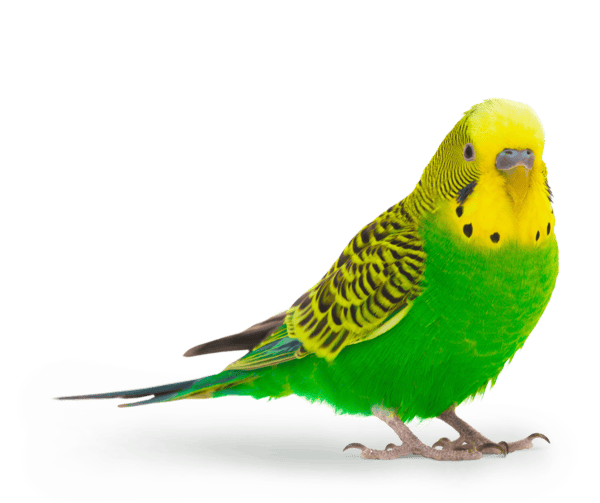
Budgerigars - Gregarious flock bird with a great urge to move
Species-Appropriate Housing – How They Feel Comfortable
Out and about together
Budgerigars should be kept in pairs as a minimum. Keeping them alone is not species-appropriate and can lead to behavioral disorders.
Structured aviary
The aviary should be at least 150 × 60 × 100 cm (L × W × H) in size, with a floor area of at least 2 m². For up to two additional pairs, the floor area must be increased by 50%. The furnishings should include natural branches, perches, and sheltered sleeping areas.
Daily free flight
A free flight space of at least 2 m³ is required for up to three pairs. The room should be designed to be safe and structured to support the natural urge to move.
Outdoor keeping with shelter
If kept outdoors all year round, a frost-free shelter is required, which is at least 100 × 50 × 100 cm (L × W × H) in size.
Bathing and sand options
Budgerigars need regular bathing opportunities for plumage care. Both water and sand baths should always be accessible.

cleanliness and hygiene
🧼 Weekly change
💦 Keep an eye on bathing areas
A clean environment is essential for the health of budgerigars:
Fresh every day
The food and water bowls, as well as the soiled litter, must be cleaned daily. Hygiene is important to protect the birds and ensure their well-being.
Thoroughly once a week
The substrate should be completely renewed once a week. With many animals, more frequent cleaning is recommended.
Observe bathing hygiene
The water and sand baths must always be clean. They are important for the plumage care and health of the budgerigars.
Other products

Nutrition
🥦 Vegetables and fruit
🧂 Minerals and grit
Budgerigars require a balanced diet consisting of high-quality grain feed for parakeets, supplemented with fresh vegetables, fruit, and occasionally sprouted food. Grit and mineral stones support digestion. Fresh water must always be available.
Grains as a basis
The basis is high-quality parakeet food. It provides energy and corresponds to the natural eating habits of budgerigars.
Fresh food supplements
Vegetables, fruit, and sprouted food provide vitamins and variety. They promote activity, colorful plumage, and health.
Secure minerals
Grit and mineral stones support digestion. Fresh water must always be available.

Activities
👥 Flock life
🌿 New stimuli
These curious birds require diverse enrichment opportunities:
Budgerigars are very active and curious – they love to climb, bathe, and explore their surroundings. Climbing branches, swings, changing perches, and natural materials stimulate movement. Particularly exciting: hidden feeding spots and new branches in the flight space.
Active environment
Climbing branches, swings, and perches invite movement. They prevent boredom and stimulate activity.
Social interaction
Budgerigars are flock birds. Exploring and playing together strengthens their bonds and increases their well-being.
Everyday impulses
New branches, food hiding places, and varied materials encourage the birds to discover. This keeps the birds lively and satisfied.